



.webp&w=3840&q=75)




.jpeg&w=3840&q=75)


.jpeg&w=3840&q=75)
.jpg&w=3840&q=75)





.webp&w=3840&q=75)







.jpg&w=3840&q=75)

.jpg&w=3840&q=75)
.jpg&w=3840&q=75)

Buying a used car in the UAE can be a practical way to save money, but checking the vehicle’s mileage is an important step before making a purchase. A car with lower mileage may appear to be in better condition and command a higher price. However, if the odometer has been tampered with, the displayed kilometres may not reflect the vehicle’s actual usage.
Odometer rollback occurs when someone illegally alters a vehicle’s mileage reading to make it appear less driven than it really is. This can mislead buyers, hide maintenance requirements, and result in unexpected repair costs.
Whether you are browsing used cars for sale in Dubai, Sharjah, or another emirate, knowing how to identify mileage discrepancies can help you make a more informed decision. If you are buying locally, it also helps to know how to avoid scams when dealing with used car dealers in Sharjah.
In this guide, we explain the common warning signs of odometer rollback, how to verify a car’s mileage history in the UAE, and what to check before purchasing a pre-owned vehicle.
What Is an Odometer Rollback?
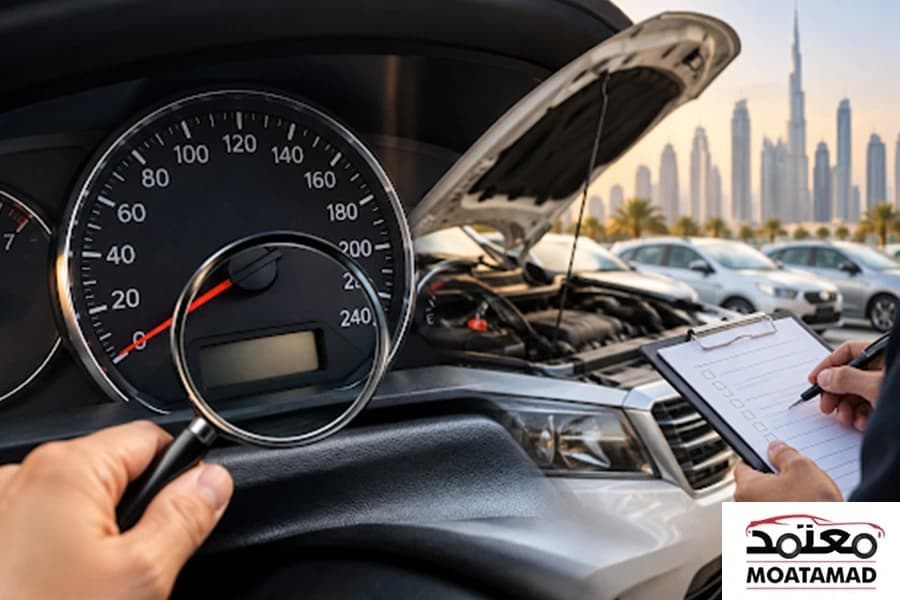
An odometer records the distance a vehicle has travelled, usually in kilometres in the UAE. Odometer rollback happens when this reading is deliberately reduced to make the car appear less used.
For example, a vehicle may have travelled 160,000 km, but its dashboard displays only 75,000 km. This difference can affect the car's perceived value and make it difficult for buyers to determine when maintenance or component replacement is due.
Modern vehicles use digital odometers, but digital displays do not automatically guarantee that the mileage is genuine. Detecting tampering may require service records, vehicle history information, and a professional diagnostic inspection.
Why Is Odometer Rollback a Concern When Buying a Used Car in the UAE?
Mileage can influence a vehicle’s resale value, maintenance schedule, and expected remaining service life. A car with manipulated mileage may look like a bargain but could have more wear than the seller’s description suggests. It is one of several hidden issues in used cars in the UAE that buyers often miss.
Here are some reasons why checking mileage is important:
● Unexpected repair costs: Components may be more worn than the displayed mileage indicates.
● Incorrect maintenance planning: Previous mileage manipulation can make it difficult to determine when major servicing is due.
● Misleading vehicle valuation: A car advertised with unusually low mileage may be priced higher than its actual condition justifies.
● Uncertain vehicle history: Inconsistent mileage records may indicate tampering or missing documentation.
● Reduced resale confidence: Unverified mileage can make it harder to establish the vehicle's value when you sell it.
Checking the mileage before purchase helps you assess the car more accurately and reduces the risk of making a decision based on misleading information.
7 Warning Signs of Odometer Rollback
1. The Mileage Does Not Match the Car's Age
One of the first things to check is whether the displayed mileage seems reasonable for the vehicle's age and reported usage.
For example, a six-year-old car showing only 20,000 km deserves closer examination if the seller cannot explain its unusually low mileage. However, some vehicles genuinely have low annual usage, so this alone does not prove tampering.
Ask the seller about the vehicle's previous usage, ownership history, and maintenance records.
Compare the answers with the available documentation before making a decision.
2. The Steering Wheel, Pedals, and Seats Show Excessive Wear
A car's interior can provide useful clues about how heavily it has been used.
Inspect the following areas:
● Steering wheel: Excessive smoothing, peeling, or worn surfaces may indicate extensive use.
● Driver's seat: Compressed cushioning, torn upholstery, and worn side bolsters may suggest frequent entry and exit.
● Pedals: Heavily worn pedal surfaces can indicate substantial driving.
● Gear selector: Excessive wear may not match a vehicle advertised as having very low mileage.
● Door handles and switches: Worn buttons and handles can provide additional context about the vehicle's usage.
Remember that interior components can be replaced, and wear varies with driving conditions and owner habits. Treat these signs as reasons to investigate further rather than conclusive evidence of odometer rollback.
3. Service Records Show Inconsistent Mileage
Service history is one of the most useful sources for checking whether a vehicle’s mileage is consistent. If you are not sure what a normal pattern looks like, it helps to know how often a used car should be serviced in the UAE climate.
● Request the available service booklet, maintenance invoices, inspection records, and authorised dealer service history.
● Arrange the records chronologically and compare the dates with the kilometres recorded at each visit.
For example:
Service Date | Recorded Mileage | Observation |
January 2023 | 48,000 km | Initial record |
January 2024 | 71,000 km | Mileage increased |
January 2025 | 96,000 km | Mileage increased |
January 2026 | 62,000 km | Warning sign: mileage decreased |
In this example, the latest record shows fewer kilometres than the previous service entry. This is a significant inconsistency that requires verification.
Possible explanations include a recording error, an incorrectly matched document, or odometer tampering. Ask the seller and service centre to clarify the discrepancy before proceeding.
4. The Dashboard or Instrument Cluster Shows Signs of Tampering
Inspect the instrument cluster for unusual physical signs, particularly if the vehicle is older or has undergone dashboard repairs.
Look for:
● Scratches or damage around the instrument panel.
● Missing or mismatched dashboard screws.
● Loose dashboard components.
● Unusual odometer display behaviour.
● Warning lights that remain illuminated or behave unexpectedly.
Digital odometer displays may not show obvious physical signs of tampering. Therefore, a clean-looking dashboard should not be treated as proof of genuine mileage.
A professional diagnostic inspection may reveal inconsistencies that are not visible during a normal viewing.
5. The Seller Cannot Provide a Clear Service History
A missing service history does not automatically mean the odometer has been altered. Some owners use independent garages, while others may have lost older maintenance documents.
However, be cautious if the seller claims the car has very low mileage but cannot provide supporting records.
Ask for:
● Previous service invoices and job cards.
● Authorised dealer maintenance records, where available.
● Vehicle inspection documentation.
● Previous ownership and usage details.
● Any available mileage records from earlier registrations.
Where possible, contact the workshop or authorised dealer directly, with the owner's permission, to verify the records.
If the seller refuses reasonable mileage verification or provides conflicting explanations, consider choosing another vehicle.
6. Tyre Condition and Other Components Do Not Match the Claimed Mileage
Tyres, brake components, batteries, and other parts can provide additional information about a vehicle’s condition.
Check the tyre manufacturing dates, tread wear, brake condition, and available replacement records. A proper used car tyre inspection can show whether the tyres fit the claimed mileage. Ask whether major components have been replaced and why.
For example, an older car advertised with exceptionally low mileage may need further investigation if several components show extensive wear.
However, tyres and mechanical parts can be replaced for many legitimate reasons. Their condition alone cannot establish the actual distance travelled.
Use these observations alongside service records, mileage history, and a professional inspection.
7. The Diagnostic Scan Reveals Mileage Inconsistencies
Modern vehicles may store mileage-related information in several electronic control modules, depending on the manufacturer and model.
A qualified technician may be able to compare available readings from the instrument cluster and other vehicle systems using suitable diagnostic equipment.
If the readings do not agree, the technician can investigate whether the discrepancy is caused by a component replacement, a programming issue, a recording error, or possible tampering.
Not every vehicle stores mileage in multiple modules, and not every diagnostic tool can retrieve all available data. Ask for a written inspection report explaining any inconsistencies identified.
How to Check a Used Car's Mileage History in the UAE
Before purchasing a pre-owned vehicle, combine official records with independent verification.
Step 1: Request the Vehicle Identification Number (VIN)
The Vehicle Identification Number, or VIN, is a unique identifier associated with the vehicle. It is generally a 17-character code on modern vehicles.
Check that the VIN on the vehicle matches the registration documents and any history reports provided by the seller.
Use the VIN to request relevant vehicle history information and investigate whether the car has been imported or previously registered elsewhere.
Step 2: Check Available Official Vehicle Records
For Dubai-registered vehicles, the Roads and Transport Authority (RTA) offers a Technical Vehicle Status Report with available ownership and technical status details. Check the RTA’s service page for what the report currently includes, as its coverage of odometer readings and accident history may vary.
For vehicles registered in other emirates, including Sharjah, you can run an EVG accident history check and use the relevant Ministry of Interior or local police services.
No single report should be treated as definitive proof of genuine mileage. Cross-check official records with service history and a professional inspection.
Step 3: Verify the Service History
Ask the seller for service invoices, maintenance records, and previous inspection reports.
Check whether the recorded kilometres increase consistently over time. Pay particular attention to unexplained mileage decreases, large gaps in documentation, or records that cannot be verified.
Where possible, confirm the information directly with the workshop that serviced the vehicle.
Step 4: Arrange a Professional Pre-Purchase Inspection
A professional inspection can help assess the car's mechanical condition and identify warning signs that may not be apparent during a test drive.
Ask the inspection centre to check:
● Available mileage records and diagnostic data.
● Engine and transmission condition.
● Dashboard and instrument cluster operation.
● Signs of previous repairs or component replacement.
● Service requirements based on the vehicle's condition.
● Any discrepancies between the displayed mileage and available records.
An independent inspection is especially valuable when the car has limited documentation or the mileage appears unusually low.
Step 5: Compare the Mileage With the Vehicle's Overall Condition
Finally, compare the mileage with the car's age, service records, interior condition, mechanical wear, and reported usage.
A reliable assessment should consider all these factors together. No single clue or report can guarantee that an odometer has never been tampered with.
If the evidence does not support the advertised mileage, ask the seller to resolve the discrepancy before committing to the purchase.
What Should You Do If You Suspect Odometer Rollback?
If you notice inconsistencies during your checks, avoid making an immediate payment or signing a purchase agreement until the issue has been investigated.
Follow these steps:
1. Ask the seller for a clear explanation of the mileage discrepancy.
2. Request supporting service records and available vehicle history information.
3. Arrange an independent inspection with appropriate diagnostic checks.
4. Keep copies of the advertisement, inspection report, and relevant communications.
5. If the discrepancy remains unresolved, consider walking away from the purchase.
6. If you believe deliberate misrepresentation has occurred, seek guidance from the relevant consumer protection or law enforcement authority.
Taking these precautions can help you avoid a costly purchase and make a decision based on verified information rather than the dashboard reading alone.
Tips for Buying a Used Car With Confidence in the UAE
Mileage verification should be part of a broader vehicle assessment. Before choosing a used car, remember to:
● Compare the asking price with similar vehicles of the same age and model.
● Review the service and ownership history.
● Check for accident records through available official sources.
● Inspect the engine, transmission, brakes, tyres, and air-conditioning system.
● Confirm the vehicle’s registration and transfer requirements, including the steps for RTA Mulkiya renewal and used car transfer.
● Test-drive the car under appropriate conditions.
● Review the estimated cost of future maintenance and repairs.
The aim is not simply to find a car with the lowest mileage. It is to find a vehicle whose mileage, condition, history, and price are consistent.
FAQs
1. How can I tell if a used car's odometer has been rolled back?
Look for inconsistent mileage in service records, excessive interior wear, unusual dashboard signs, and discrepancies in available electronic diagnostic data. Cross-check these findings with vehicle history information and a professional inspection.
2. Can digital odometers be tampered with?
Yes. Digital odometers can be manipulated, so a digital display alone does not guarantee genuine mileage. Depending on the vehicle, diagnostic checks and independent records may help identify inconsistencies.
3. Can I check a used car's mileage history in Dubai?
You can request available vehicle information through the RTA's vehicle status reporting service, subject to its eligibility and consent requirements. However, the report may not include odometer readings or complete maintenance history, so additional verification is important.
4. Does high mileage always mean a used car is a bad purchase?
No. A well-maintained vehicle with higher mileage may be a better choice than a poorly maintained vehicle with lower mileage. Service history, mechanical condition, maintenance requirements, and price should all influence your decision.
5. Should I buy a used car if its mileage cannot be verified?
Be cautious if the seller cannot substantiate the advertised mileage. Ask for further documentation and an independent inspection. If important discrepancies remain unresolved, consider choosing another vehicle.
Choose a Used Car With Confidence
Odometer rollback can make a used car appear more attractive than its actual condition warrants. Checking service records, available vehicle history, interior wear, and diagnostic information can help you identify potential mileage discrepancies before purchasing.
When buying a used car in the UAE, do not rely on the dashboard reading alone. Verify the available records, arrange a professional inspection, and make sure the vehicle’s condition matches its advertised history.
Ready to find your next car? Browse our used cars and check the latest offers to find a vehicle that fits your budget and driving needs.