.webp&w=3840&q=75)
.jpeg&w=3840&q=75)

.jpeg&w=3840&q=75)
.jpg&w=3840&q=75)
.webp&w=3840&q=75)

.jpg&w=3840&q=75)
.jpg&w=3840&q=75)
.jpg&w=3840&q=75)
RTA Mulkiya Renewal & Used Car Transfer: Step-by-Step Guide for UAE Buyers 2026
You've found the perfect used car. The price is right, the mileage checks out, and you're ready to close the deal. But what happens next? For thousands of used car buyers in the UAE every year, the post-purchase paperwork, specifically the Mulkiya transfer and renewal process, turns out to be the most confusing part of the entire experience.
At Moatamad Cars, we've helped thousands of buyers complete their used car purchases without stress, including handling all documentation. This comprehensive guide breaks down everything you need to know about RTA Mulkiya renewal and used car ownership transfer in 2026, whether you're buying second-hand cars in Sharjah or anywhere across the UAE.
What is a Mulkiya? Understanding the UAE Vehicle Registration Card
Mulkiya is the official vehicle registration card issued by the Roads and Transport Authority (RTA) and relevant transport authorities across the UAE. It serves as proof of vehicle ownership and confirms that the vehicle is legally registered for road use. Every vehicle owner must maintain a valid Mulkiya and renew it annually.
Your Mulkiya contains:
- Vehicle make, model, and year
- Chassis and engine number
- Plate number
- Registered owner's name and Emirates ID
- Insurance validity dates
- Registration expiry date
- Emirate of registration
Why Mulkiya Renewal Matters When Buying a Used Car
Before purchasing any used vehicle, buyers should verify:
- Current Mulkiya validity
- Vehicle inspection status
- Outstanding fines
- Salik dues
- Insurance status
- Ownership records
A valid registration indicates that the vehicle has met UAE road safety requirements and can be legally transferred to the new owner.
Documents Required for Mulkiya Renewal in UAE
To renew vehicle registration in 2026, owners generally need:
For Individuals
- Emirates ID
- Valid UAE driving licence
- Current Mulkiya
- Valid vehicle insurance
- Vehicle inspection certificate (for vehicles older than 3 years)
- Clearance of traffic fines and Salik dues
For Financed Vehicles
- Bank NOC (if required)
- Updated insurance
- Vehicle inspection report
Vehicle insurance should be active and properly updated in the RTA system before initiating renewal. If you're purchasing with a bank loan, read our complete guide to financing a used car in UAE for bank NOC requirements and loan clearance steps.
Step-by-Step RTA Mulkiya Renewal Process (2026)
Step 1: Check Registration Expiry Date
Monitor your vehicle registration validity through:
- RTA Website
- RTA Dubai App
- UAE MOI Portal
Renewing before expiry helps avoid penalties.
Step 2: Complete Vehicle Inspection
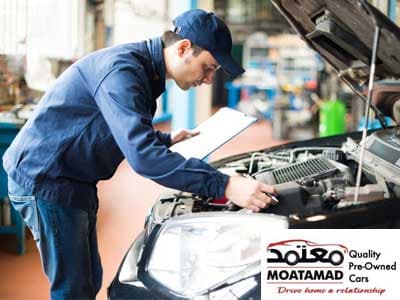
Vehicles older than three years require a technical inspection at an approved testing center. The inspection checks:
- Brakes
- Tires
- Lights
- Emissions
- Suspension
- Overall roadworthiness
A successful inspection is mandatory before renewal.
Step 3: Renew Vehicle Insurance
Your vehicle must have valid insurance before renewal can proceed. Ensure:
- Policy details match vehicle information
- Insurance is updated in the system
- Coverage meets UAE requirements
Insurance verification is an important part of the renewal process.
Step 4: Clear Traffic Fines
Outstanding fines can block the renewal process. Check and settle:
- Traffic violations
- Parking fines
- Salik toll charges
Renewal applications may be delayed until all dues are cleared.
Step 5: Submit Renewal Application
Vehicle owners can renew through:
- RTA Website
- RTA Mobile App
- Vehicle Testing Centers
- Self-Service Kiosks
- Customer Happiness Centers
Digital channels have simplified the process considerably in 2026.
Step 6: Pay Renewal Fees
Fees vary based on vehicle type and category. Typical charges include:
- Registration renewal fee
- Inspection fee
- Knowledge and Innovation Fee
- Delivery fee (if applicable)
Government fees are subject to periodic updates.
Step 7: Receive Updated Mulkiya
After successful payment:
- Digital Mulkiya is issued
- Physical card can be delivered
- Registration remains valid for one year
The process can often be completed within minutes through online channels.
Used Car Ownership Transfer Process in UAE
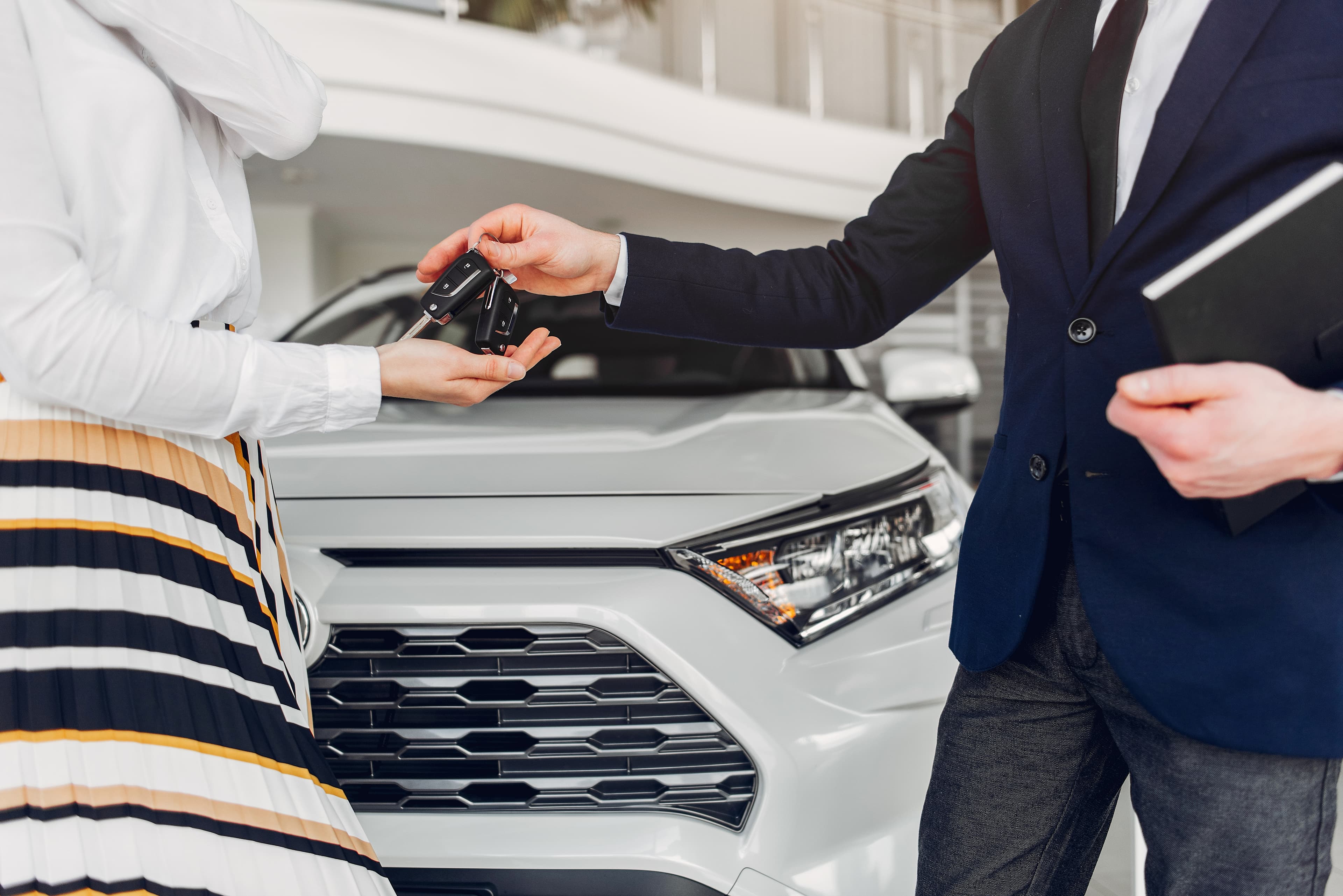
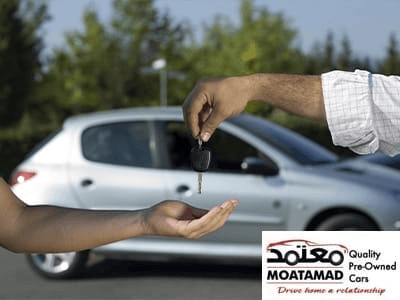
When purchasing a used car, ownership must be officially transferred through the RTA or relevant transport authority. Ownership transfer protects both buyer and seller by ensuring legal registration and accurate ownership records.
Documents Required from the Seller
The seller should provide:
- Original Emirates ID
- Original Mulkiya
- Vehicle sale agreement
- Clearance of all fines
- Vehicle keys and documentation
Unpaid fines must be cleared before ownership transfer can proceed.
Documents Required from the Buyer
The buyer typically needs:
- Emirates ID
- UAE Driving Licence
- Vehicle Insurance Policy
- Payment for transfer fees
Insurance should be arranged before visiting the transfer center. For a complete checklist, see our full guide on key documents required to buy second-hand cars in UAE.
Step-by-Step Used Car Transfer Process
Step 1: Verify Vehicle Details
Before making payment:
- Review service history
- Check accident history
- Verify VIN/chassis number
- Confirm ownership details
- Inspect the vehicle condition
This reduces the risk of future disputes. We strongly recommend running an EVG accident history check on any used car before signing, it reveals past accidents, insurance claims, and ownership records.
Step 2: Conduct Vehicle Inspection
Although not always mandatory in every scenario, an independent inspection helps buyers identify:
- Engine issues
- Transmission problems
- Suspension wear
- Hidden accident damage
Not sure what to look for? Read our step-by-step guide on how to inspect a used car before your visit. At Moatamad Cars, buyers can access professionally inspected vehicles for added confidence.
Step 3: Arrange Insurance
The buyer must obtain:
- Third-party insurance or
- Comprehensive insurance
The insurance policy should be issued before ownership transfer.
Step 4: Visit RTA Transfer Center
Both parties should attend the transfer center with all required documents. The RTA team verifies:
- Identity
- Vehicle ownership
- Insurance
- Inspection status
- Outstanding fines
Step 5: Pay Transfer Fees
Ownership transfer fees generally include:
- Transfer charges
- Administrative fees
- Inspection fees (if applicable)
The exact amount varies depending on vehicle category and registration type.
Step 6: Receive New Mulkiya
Once the transfer is completed:
- The buyer becomes the legal owner
- A new registration card is issued
- The vehicle is officially registered under the buyer's name
Common Mistakes to Avoid During Transfer & Renewal
Even experienced buyers make avoidable errors. Here are the most common issues - and how to prevent them:
- Bringing a photocopy of the Mulkiya instead of the original: RTA requires the original documents. A photocopy will result in immediate rejection. Always ensure the seller hands over the original registration card.
- Insurance is still in the seller's name: This is the single most frequent reason for a failed transfer. The insurance certificate must already show the buyer as the policyholder before you visit the RTA. Arrange your insurance first.
- Forgetting to clear fines beforehand: An unpaid fine, even a minor one, can block the entire transfer. Check fines online before your appointment.
- Assuming the seller cancelled their insurance: If the seller doesn't cancel their insurance after the sale, you may face complications. Remind the seller to handle the cancellation and claim their pro-rata refund.
- Not checking the vehicle for modifications: Unapproved vehicle modifications, tinted windows beyond legal limits, non-standard tyres, and engine changes can cause an inspection failure and block the transfer. Ensure any modifications are legal before the inspection.
- Letting the Mulkiya expire after purchase: If you delay completing the transfer and the existing Mulkiya expires in the meantime, you'll face additional re-registration costs and complications. Complete the transfer promptly after purchase.
Special Situations: Cross-Emirate Transfers
If you're buying a car registered in one emirate but you reside in another, the process involves an additional step:
- The seller must cancel/de-register the vehicle in their emirate
- The seller's traffic department issues a cancellation letter and NOC
- The buyer takes the NOC to their own emirate's traffic department
- The car is freshly registered in the buyer's emirate under their name
Tips for a Smooth Vehicle Transfer in 2026
- Verify vehicle ownership before payment.
- Complete insurance arrangements early.
- Check and clear outstanding fines.
- Review vehicle inspection reports.
- Keep copies of all transfer documents.
- Use authorized RTA centers.
- Confirm registration validity before purchasing.
These simple steps can save time and prevent complications later.
How Moatamad Cars Makes the Transfer Process Easy
We know that paperwork can be the most stressful part of buying a used car - especially for first-time buyers or new UAE residents unfamiliar with the system. That's why Moatamad Cars provides end-to-end support throughout the documentation process:
- Every car in our inventory is pre-inspected with our 101-point certification - satisfying the roadworthiness requirement for RTA transfer
- We confirm all vehicles are free from outstanding fines and bank loans before listing
- Our team assists with coordinating the RTA transfer process so you're never left navigating government portals alone
- We work with insurance partners to help you get a competitive quote in your name before completion
- We handle all the paperwork, so your experience is smooth from test drive to driving away
With operations across Sharjah and the UAE, and thousands of satisfied customers, Moatamad Cars is your trusted partner for a stress-free used car purchase.
Don't Let Paperwork Derail Your Used Car Purchase
The Mulkiya transfer and renewal process in the UAE is well-structured and - once you know the steps - genuinely straightforward. The key is preparation: gather the right documents, clear all fines in advance, and secure your insurance before visiting any RTA centre.
For most buyers purchasing from a certified dealer, the heavy lifting is handled for you. For those buying privately, this guide gives you everything you need to complete the process confidently and legally.
Ready to find your next certified used car in Sharjah? Explore our full inventory at Moatamad Cars , every vehicle is pre-inspected, fines-free, and documentation-ready, so your journey from browsing to driving is as smooth as possible.
FAQs
1. Can I drive my newly purchased used car before completing the Mulkiya transfer?
Legally, you should not drive the vehicle until the ownership transfer is completed and a valid Mulkiya has been issued in your name with active insurance coverage. Before taking delivery, ensure all transfer requirements have been completed or check if temporary dealer plates are available.
2. How long does the ownership transfer process take in the UAE?
If all required documents are available and the vehicle passes inspection, the ownership transfer process typically takes between 1 and 3 hours at an approved RTA service center. Online registration renewals that do not require inspection can often be completed in less than 15 minutes.
3. Can I buy a used car with an expired Mulkiya?
Yes, you can purchase a used car with an expired Mulkiya. However, you should verify the vehicle's inspection status, insurance validity, and any outstanding fines before proceeding. Additional renewal procedures may be required before ownership can be transferred.
4. Can expatriates register and transfer a vehicle in the UAE?
Yes. UAE residents, including expatriates, can own and register vehicles. To transfer ownership, you will generally need a valid Emirates ID, UAE residency visa, and UAE driving licence.
5. Do both the buyer and seller need to be present during the vehicle transfer?
In most cases, both parties are required to be present at the transfer center. If either party cannot attend, a notarized Power of Attorney (POA) may be used to authorize a representative to complete the transaction on their behalf.
6. What happens if the previous owner has an outstanding car loan?
Before purchasing a used vehicle, always request a bank clearance letter confirming that there is no active loan or mortgage against the vehicle. Ownership transfer cannot be completed if the vehicle has an outstanding bank mortgage.
7. What documents are required for a used car ownership transfer in the UAE?
The required documents usually include a valid Emirates ID, UAE driving licence, vehicle insurance policy, original Mulkiya, vehicle inspection certificate (if applicable), and any additional documents requested by the RTA or local transport authority.
8. What is an EVG check, and should I do one before buying a used car?
An EVG (Emirates Vehicle Gate) check provides information about a vehicle's accident history, insurance claims, and ownership records. It is highly recommended before purchasing any used vehicle in the UAE, as it helps buyers make informed decisions.
9. Do I need vehicle insurance before transferring ownership?
Yes. The buyer must obtain valid vehicle insurance before the ownership transfer process can be completed and a new Mulkiya can be issued.
10. How can Moatamad Cars help with used car purchases and transfers?
Moatamad Cars assists buyers by offering professionally inspected used vehicles, transparent documentation, expert guidance on RTA procedures, and support throughout the vehicle ownership transfer and registration process. This helps ensure a smooth and hassle-free buying experience.